Broflixsi Apr 2026

FATAL TWELVE OFFICIAL WEBSITE

FATAL TWELVE
Release on
2018.3.30
suspense Visual novel with voice

WHAT'S NEW

Fatal Twelve on Steam

Feature

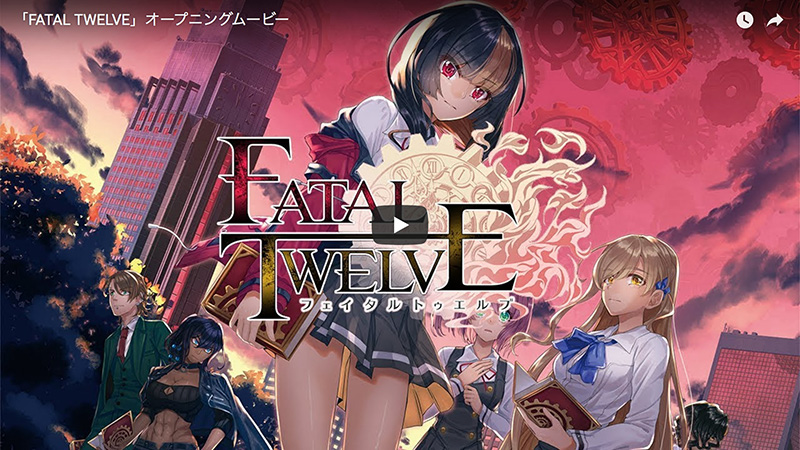
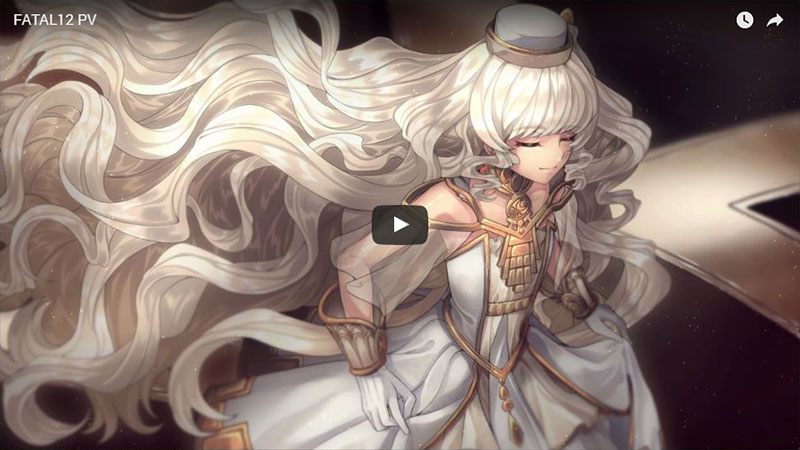
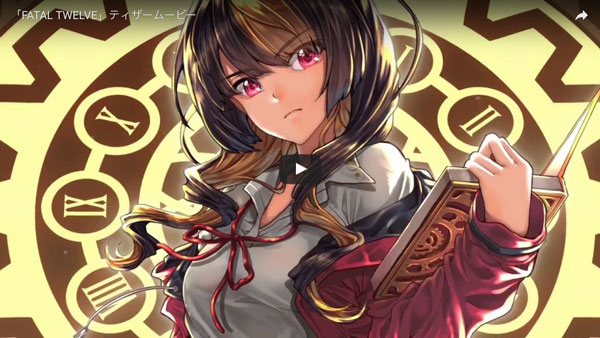
Opening Movie

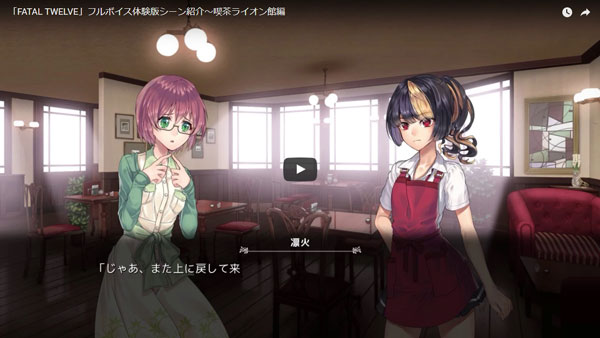
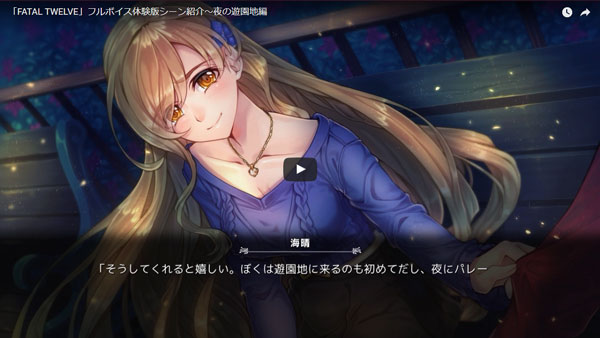
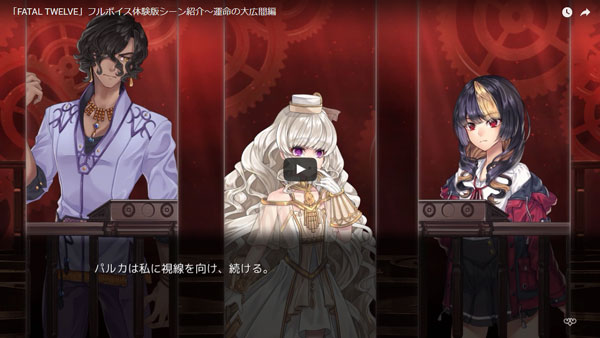
Demo (Full Voice Version)

Download(English)

for Windows, Linux for Mac OS X

Story

"Good evening, my lovely little slaves to fate." Shishimai Rinka was a highschooler who ran a small café named Lion House in place of her grandmother. She lived her life much like any other person her age, but one day, she was caught up in an explosion while returning home on the train alongside her friend, Hitsuji Naomi. In an attempt to save her friend's life, she shields her on instinct the moment the explosion goes off, losing her life in the process. However, before she knew it, she was back at Lion House, happily chatting with her friends as if nothing had happened in the first place.

A few days later, she found herself in a strange world. Here she met Parca, an odd girl claiming to be a goddess. It turns out that she had somehow become a participant in Divine Selection, a ritual carried out over twelve weeks by twelve people, which allowed them to compete in order to undo their deaths. What shocked Rinka most of all, however, was the presence of her friend Mishima Miharu amongst the twelve.

In order to make it through Divine Selection, one must eliminate others by gathering information regarding their name, cause of death and regret in the real world, then "electing" them.

This turn of events would lead to her learning about the truth behind her death, as well as her own personal regrets. She would also come to face the reality that Miharu was willing to throw her life away for her sake, as well as the extents to which the other participants would go to in order to live through to the end.

Far more experiences than she ever could have imagined awaited her now, but where will her resolve lead her once all is said and done...?

Character

Shishimai Rinka Hitsuji Naomi Mishima Miharu Parca, Goddess of Destiny Oguma Mao Chan Chan Mysterious Child Man Within the Dream Federico Carminati Odette Malencon Alan Scorpion Scale Jones Ro Chanho Kamebuchi Keiko Sofiya Priessnitz Alexeievna Ushizuka Shigetsugu

獅子舞 凛火

Shishimai Rink(CV.松井 恵理子)
broflixsi

Sample Voices

volume
volume

  • Shishimai Rinka
  • Hitsuji Naomi
  • Mishima Miharu
  • Parca, Goddess of Destiny
  • Oguma Mao
  • Chan Chan
  • Mysterious Child
  • Man Within the Dream
  • Federico Carminati
  • Odette Malencon
  • Alan Scorpion
  • Scale Jones
  • Ro Chanho
  • Kamebuchi Keiko
  • Sofiya Priessnitz Alexeievna
  • Ushizuka Shigetsugu

Broflixsi Apr 2026

Looking forward, broflixsi suggests several enduring trends: the continued fusion of social networks with streaming platforms; a marketplace where micro-communities exert outsized influence over cultural visibility; and an aesthetic economy organized around remix, shareability, and rapid referential exchange. How platforms and creators navigate content moderation, recommendation design, and monetization within these micro-ecologies will determine whether broflixsi matures into a vibrant, inclusive cultural mode or fragments into siloed, exclusionary niches.

Politically and socially, broflixsi is double-edged. On one hand, it fosters community and belonging for participants who find camaraderie through shared tastes and humor; it can be a site of low-stakes social bonding that eases loneliness. On the other hand, the emphasis on in-group signaling can create echo chambers where ironic detachment hardens into exclusion or where harmful tropes are normalized under the guise of “banter.” Understanding broflixsi thus requires attention to moderation, platform affordances, and the cultural literacy needed to distinguish playful subculture from exclusionary behavior. broflixsi

In sum, broflixsi is more than slang—it is a lens for reading contemporary media life. It crystallizes how taste, identity, and sociality are negotiated through content, and it highlights the cultural, economic, and ethical tensions that arise when consumption is itself a form of community. On one hand, it fosters community and belonging

Culturally, broflixsi is important because it reframes passive consumption as a social act. Watching is no longer solitary; it is performative and networked. Shared playlists, synchronous viewing sessions, memeified reactions, and the curation of persona around preferred content turn media into a communicative ritual. In this frame, choices about what to stream become shorthand for identity: genre preferences, ironic vs. sincere engagement, and the signaling of in-group knowledge. Broflixsi users trade not just recommendations but cultural capital—one-liners, reaction clips, and niche references that function as badges within their communities. It crystallizes how taste, identity, and sociality are

Economically, broflixsi illustrates the power of micro-communities to shape attention economies. Algorithms respond to clustered engagement patterns, amplifying certain titles and creators that resonate within these social clusters. As a result, creators and platforms that tune into the aesthetics and interaction modes of broflixsi—quick punchlines, shareable beats, modular formats suited to remix—gain disproportionate visibility. This dynamic encourages formats optimized for virality and social reusability over slow-burn artistic strategies, reshaping production incentives across media industries.


Looking forward, broflixsi suggests several enduring trends: the continued fusion of social networks with streaming platforms; a marketplace where micro-communities exert outsized influence over cultural visibility; and an aesthetic economy organized around remix, shareability, and rapid referential exchange. How platforms and creators navigate content moderation, recommendation design, and monetization within these micro-ecologies will determine whether broflixsi matures into a vibrant, inclusive cultural mode or fragments into siloed, exclusionary niches.

Politically and socially, broflixsi is double-edged. On one hand, it fosters community and belonging for participants who find camaraderie through shared tastes and humor; it can be a site of low-stakes social bonding that eases loneliness. On the other hand, the emphasis on in-group signaling can create echo chambers where ironic detachment hardens into exclusion or where harmful tropes are normalized under the guise of “banter.” Understanding broflixsi thus requires attention to moderation, platform affordances, and the cultural literacy needed to distinguish playful subculture from exclusionary behavior.

In sum, broflixsi is more than slang—it is a lens for reading contemporary media life. It crystallizes how taste, identity, and sociality are negotiated through content, and it highlights the cultural, economic, and ethical tensions that arise when consumption is itself a form of community.

Culturally, broflixsi is important because it reframes passive consumption as a social act. Watching is no longer solitary; it is performative and networked. Shared playlists, synchronous viewing sessions, memeified reactions, and the curation of persona around preferred content turn media into a communicative ritual. In this frame, choices about what to stream become shorthand for identity: genre preferences, ironic vs. sincere engagement, and the signaling of in-group knowledge. Broflixsi users trade not just recommendations but cultural capital—one-liners, reaction clips, and niche references that function as badges within their communities.

Economically, broflixsi illustrates the power of micro-communities to shape attention economies. Algorithms respond to clustered engagement patterns, amplifying certain titles and creators that resonate within these social clusters. As a result, creators and platforms that tune into the aesthetics and interaction modes of broflixsi—quick punchlines, shareable beats, modular formats suited to remix—gain disproportionate visibility. This dynamic encourages formats optimized for virality and social reusability over slow-burn artistic strategies, reshaping production incentives across media industries.

Product

Title
FATAL TWELVE
Group
aiueoKompany
Story
Akeo
Artwork/Character Design
Shio-kozi
Background Art
Keimaru / Quunplant / VISMODEL / Senju Kobo
Music
Low
Movie
Carefree / VISMODEL / Ami Nakazawa
Script
DanieleP
Opening Theme
"Unveil"
Vocals : Kuyuri
Lyrics : TOSHIKI(from DAIZY BLUE)
Composition & Arrangement : Low
Ending Theme
???
Translaion
SekaiProject
Release date
Steam : Late March 2018
Price
$20
Rating
All ages
Supported OS
Windows 7/8.1/10
macOSX(download only)
Linux
Format
Steam download
CPU
Pentium3 1.0GHz or higher
RAM
512MB or higher
HDD
3GB or higher
Screen resolution
1280×720 or higher (16:9)
Others
A video card which supports DirectX 9.0 or above is required.

FATALTWELVE
JAPANESE ENGLISH SELECT LANGUAGE