
Advanced spell checking
Expert proofreading
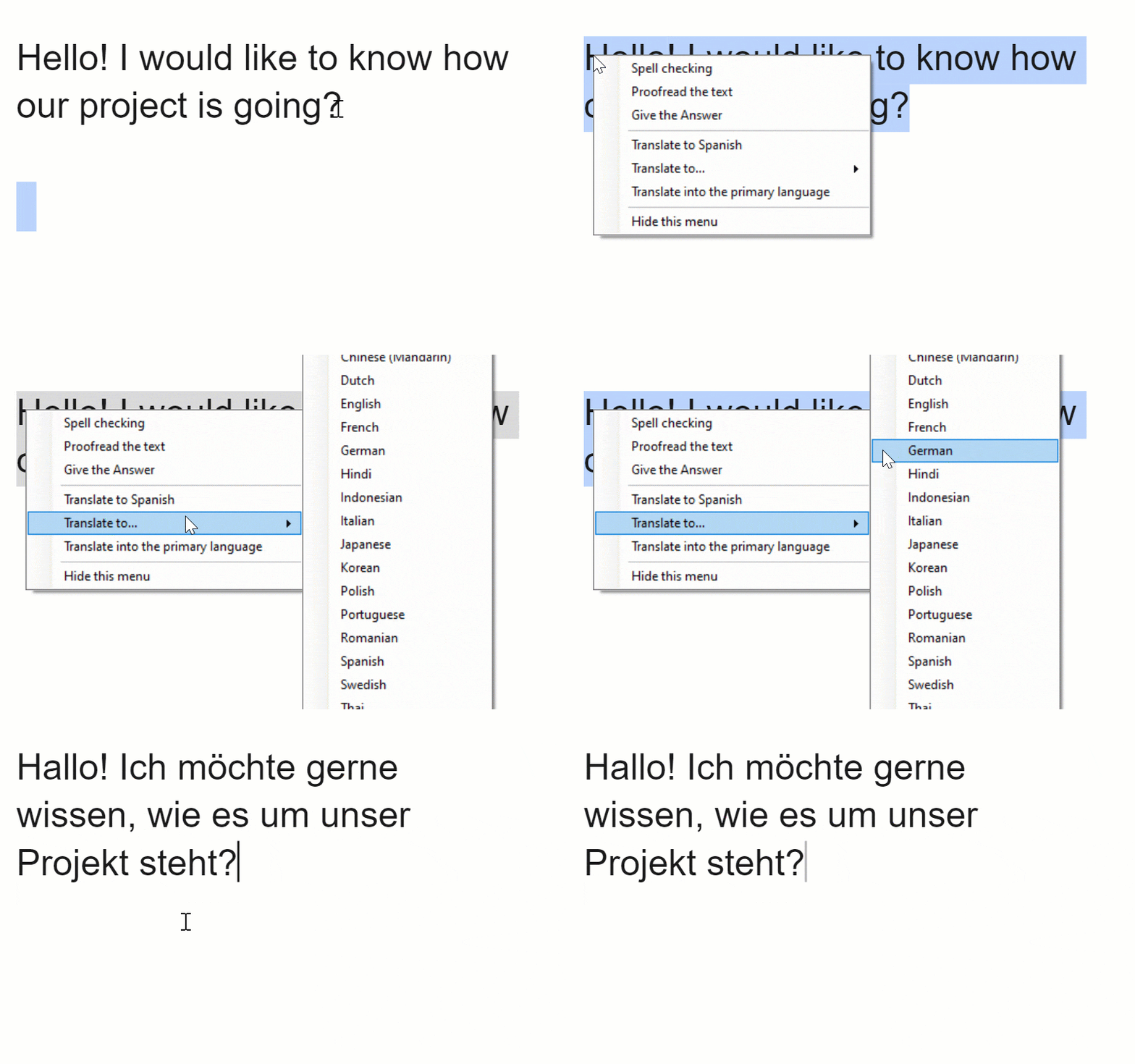
Accurate translation
Instant in-place ChatGPT answers

Works with these apps and many others








GPT Tools lets you spellcheck text inside any program that doesn't support spellchecking. With the power of GPT Tools, you can spellcheck any of the 76 languages supported by ChatGPT.

Write text as well as you can, and then the tool will elevate it to the fluency of a native speaker. Utilize the mighty potential of ChatGPT, which has currently mastered an impressive 76 languages.
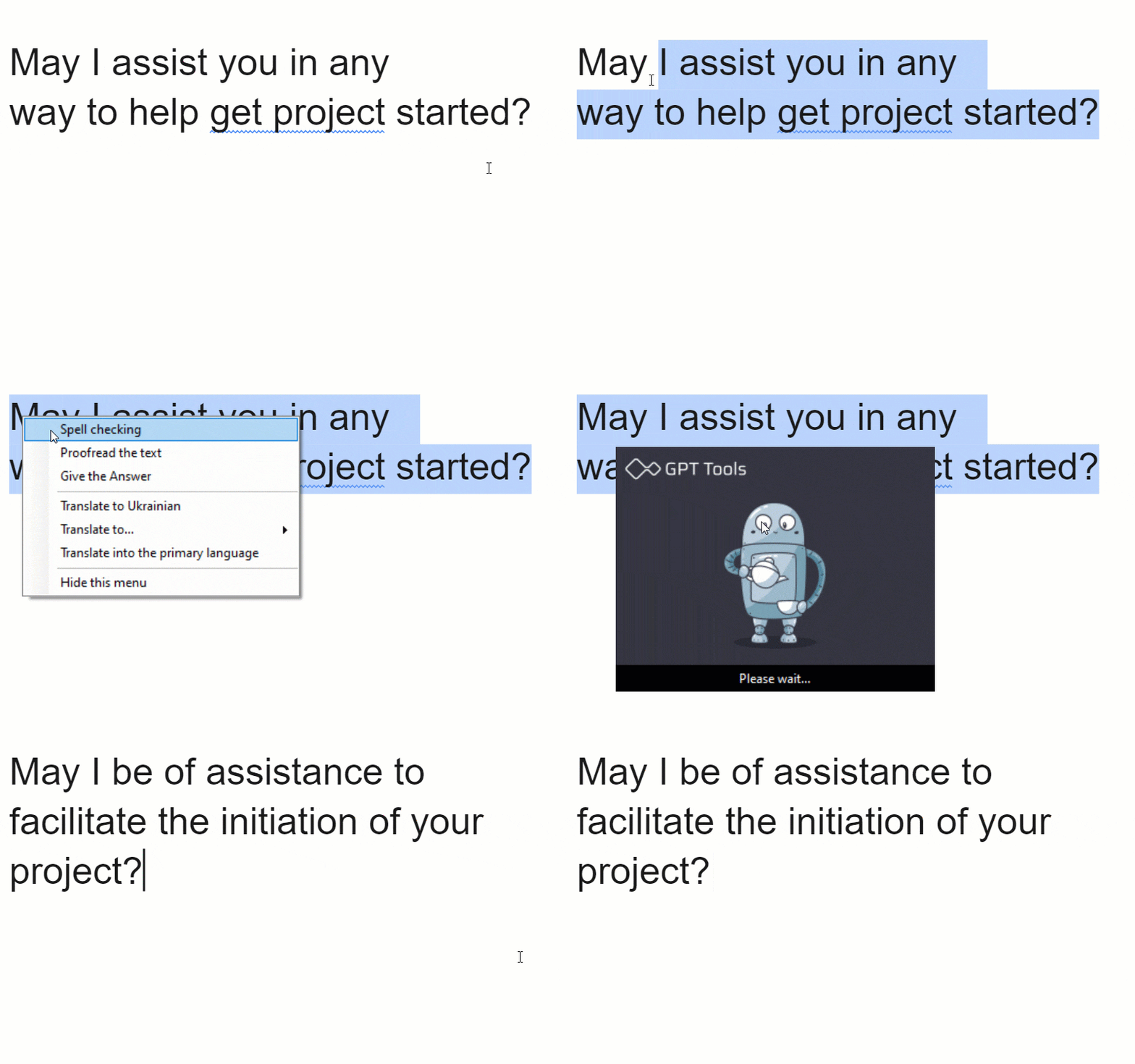
Your text gets translated in a few seconds right where you wrote it, for example, in a chat or a document.
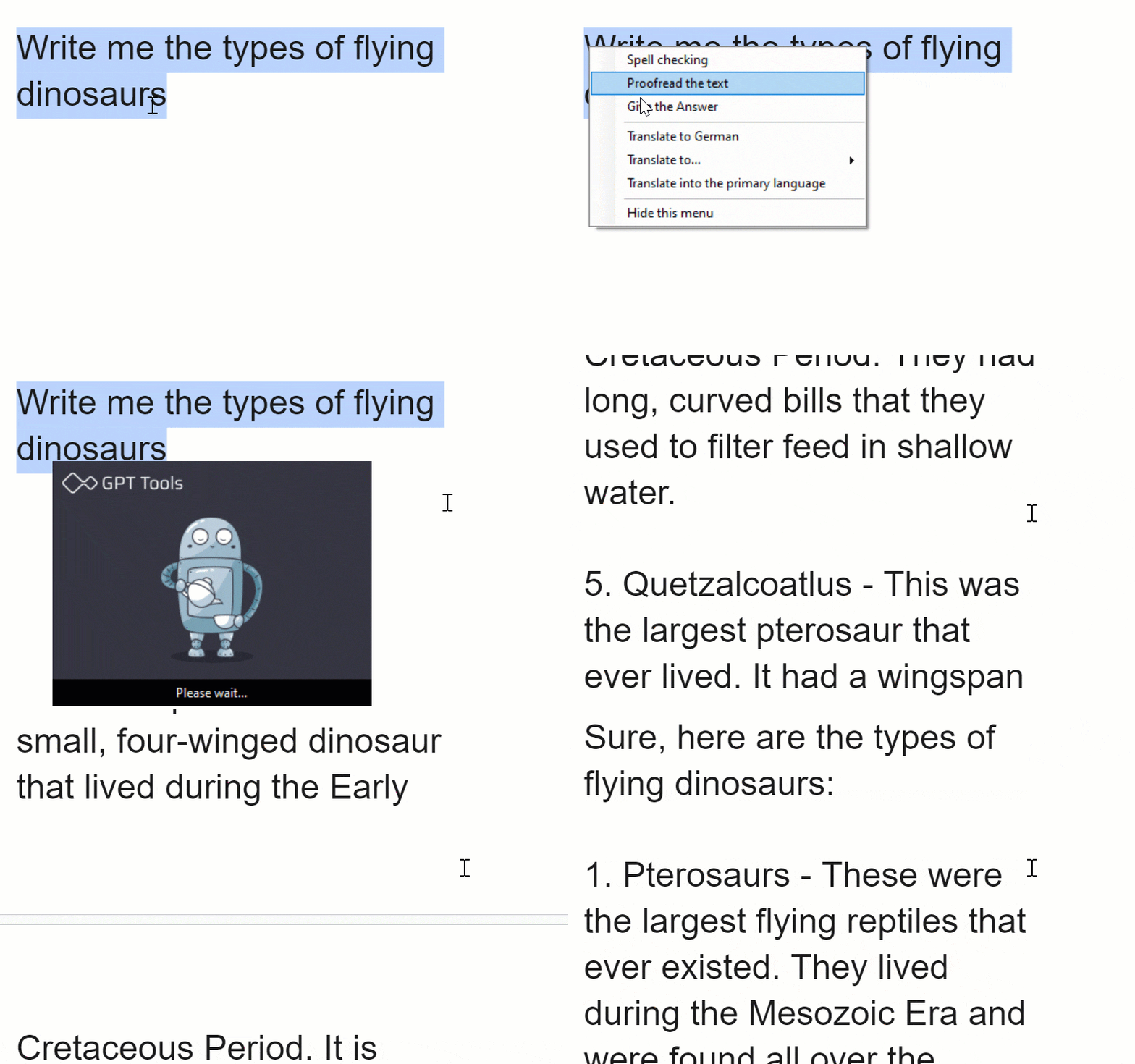
Just type your question anywhere, and GPT Tools will replace your question with the answer from ChatGPT.
Hindi CC movies are a step in the right direction towards making Indian cinema more inclusive and accessible. By breaking language barriers, these films are promoting cultural exchange, increasing viewership, and creating new business opportunities. As the Indian film industry continues to evolve, we can expect to see more Hindi CC movies, catering to a diverse and wider audience.
The Indian film industry has witnessed a significant transformation in recent years, with the emergence of Hindi CC (Closed Captioned) movies. This new trend has made cinema more accessible and inclusive, catering to a wider audience across the country. In this article, we'll explore the concept of Hindi CC movies, their benefits, and the impact they're having on the Indian film industry. hindi cc movie
India is a diverse country with 22 official languages and numerous dialects. While Hindi is widely spoken and understood, many Indians, particularly in southern and eastern India, may not be fluent in Hindi. This creates a barrier for them to enjoy Bollywood films, which are predominantly produced in Hindi. By providing English closed captions, Hindi CC movies bridge this gap, enabling a broader audience to appreciate and enjoy Indian cinema. Hindi CC movies are a step in the
Hindi CC movies are films that are produced in Hindi with English closed captions, making them easily understandable for non-Hindi speaking audiences. This initiative was first introduced by the Film Federation of India, in collaboration with the Ministry of Information and Broadcasting, to promote linguistic inclusivity in Indian cinema. The Indian film industry has witnessed a significant