Panoramic Indian Painting Class 11 Pdf Download 💫
Block websites, games and applications to boost your productivity and reclaim your free time.
Download Explore Features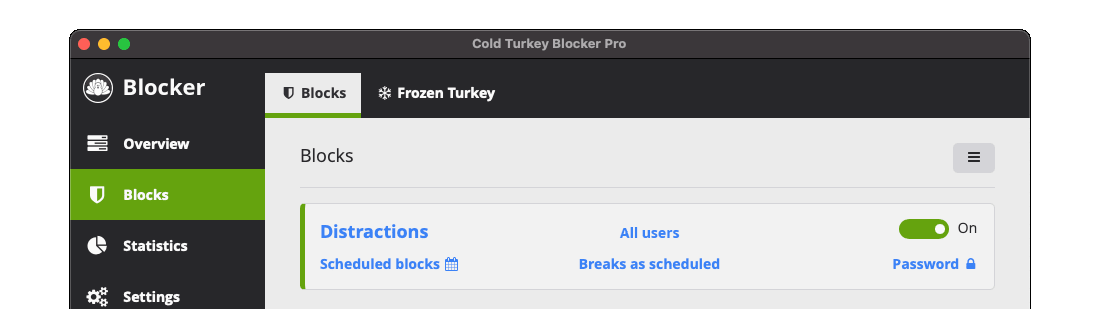
Other website blockers are easy to cheat. Cold Turkey Blocker makes it almost impossible to stop the block once you lock it.
The different locking options available can be found on the features page.
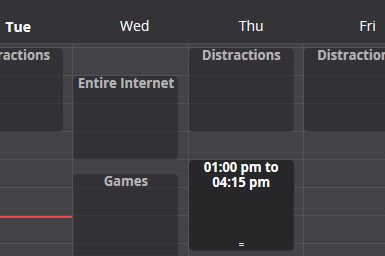
Block anything from specific websites and applications to the entire internet with a few exceptions. Want to schedule breaks from your computer? You can do that too.
See an overview of all other features.
All of your settings and statistics are stored locally on your computer and everything you block is kept private. If you share your computer, an application password can be set for extra privacy.
Feel free to read our privacy statement.
Subscriptions kinda suck. Our products are a one time purchase so that you can stay productive in the long term. Only one product key is needed for all computers you personally use and you also get free lifetime updates.
Our pricing page speaks for itself.

Beyond technique and history, the text nudged students toward questions that mattered. Who chooses the subject of a painting? Whose gods are centered? What of women’s depictions across time—idealized, veiled, or absent—and what does that absence speak? These prompts turned the panoramic gaze inward, insisting that understanding art includes interrogating power and voice.
Chapters marched chronologically but smelled of many regions: Ajanta’s luminous frescoes that made light itself seem painted; the delicate linearity of Mughal miniatures where emperors and courtiers exist in jewel-box intimacy; the bold, narrative scrolls of Pattachitra unspooling myths like long, patient rivers. The PDF’s annotations teased apart pigments—earth reds, indigo, lapis—and the recipes that once tied color to sacred practice. For a student, these are more than facts; they are recipes of identity. panoramic indian painting class 11 pdf download
There were teacher notes tucked between sections—exercises that asked: Compare a Mughal portrait’s use of space to Rajput emphasis on heroism; construct your own miniature using a palette limited to five colors. Each assignment felt like a provocation: to see, to mimic, to reinterpret. And in the margins, hyperlinks offered downloadable plates—high-resolution images that, for a moment, turned my laptop into a portable museum. I could zoom until a brushstroke became a ridge, until the painter’s hand felt within reach. Beyond technique and history, the text nudged students
I downloaded the file that evening and printed a single folio—the image of a procession crossing a stylized bridge. Under lamplight, the paper felt thinner than the book in the classroom, yet the scene retained its weight. In that moment I understood the remarkable thing about a Class 11 textbook presented as a PDF: it democratizes access, compresses centuries into teachable units, and still—if taught well—sparks the same reverence and curiosity as the oldest painted walls. The panorama it offers is not merely a survey of styles; it’s an education in seeing: how to hold distance and detail together, how to read a color as history, and how to place one’s own mark in a field much vaster than the page. hybridized—Kolkata ateliers adopting oil
Practical sections grounded the panoramic sweep: step-by-step guides to fresco technique, tempera mixing, miniature proportion grids. For a Class 11 student, these felt democratic—knowledge once guarded in guilds was now distilled into accessible steps. The PDF format amplified this: downloadable templates, printable color-mixing charts, and scaffolded rubrics for assessment. Pedagogy met craft, and the classroom could host both history and hands-on making.
By the final chapter, contemporary practitioners reassembled tradition into fresh geometries. Street artists reimagined mythic panels on concrete walls; multimedia collectives layered miniature techniques with digital projection. The PDF closed not with an ending but with an invitation: continue the panorama; place your brush where history narrows and widen it again.
What startled me was how the narrative framed continuity and rupture as companions. Colonial contact wasn’t a single eclipse but a series of small shifts: the introduction of linear perspective, new materials, patronage that reshaped subject matter. Yet indigenous forms adapted, resisted, hybridized—Kolkata ateliers adopting oil, folk artists absorbing print forms—so that Indian painting remained panoramic not because it contained everything, but because it kept enlarging its field of view.